

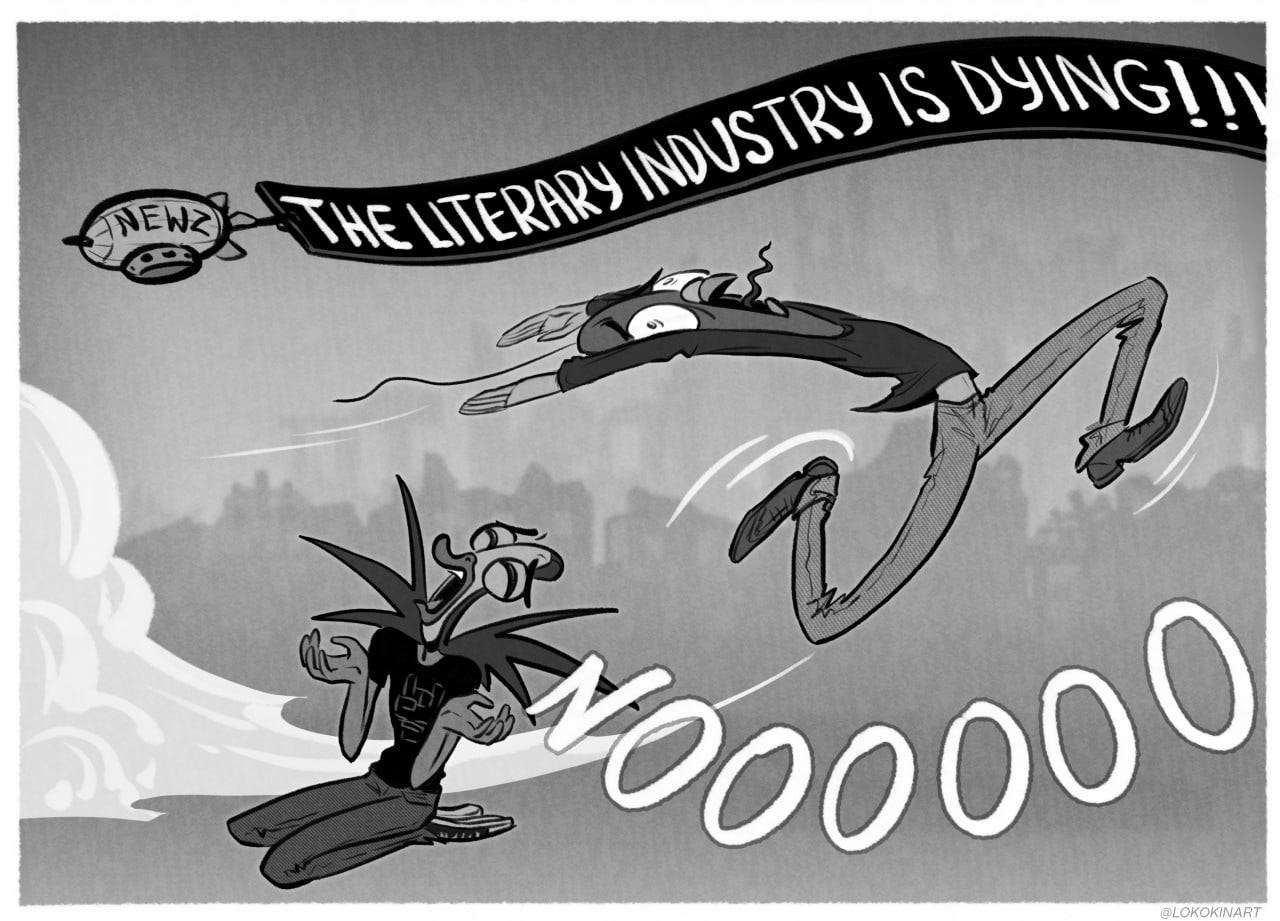
The literary community is a place where creativity can flourish, brilliant stories can be told, and new ideas can grow into ideologies shared by millions. It is also a place where some people masturbate themselves to death in one of humankind's longest-running circle jerks.
So whenever its doom feels near, there are those who fight it, those who ache for it, and those who try to create something new.
This is about the third kind.
Recently, several lit mags have shut down: The Moth, The Jellyfish Review, The Rupture, (mac)ro(mic), Catapult (sort of), The Bear Creek Gazette, and so on. Last year, there was The Believer (announced but still trucking along), Bookforum, and Astra Magazine. And there have been dozens more, dying their quiet little deaths along the way.
In the midst of this rapidly shifting landscape, an MFA student reached out to ask us some questions for their thesis.
"Do you have any insight into why so many seem to be closing, including big names such as The Moth, Jellyfish Review, and The Rupture? Is there a common issue, or a combination of mitigating factors?"
Up until that point, we hadn't given it much thought. So we went and read some of the many articles over the years (in highly well-regarded magazines) announcing The End of Literary Magazines, The Death of the Writing World, Literature’s Final Days! And we thought…
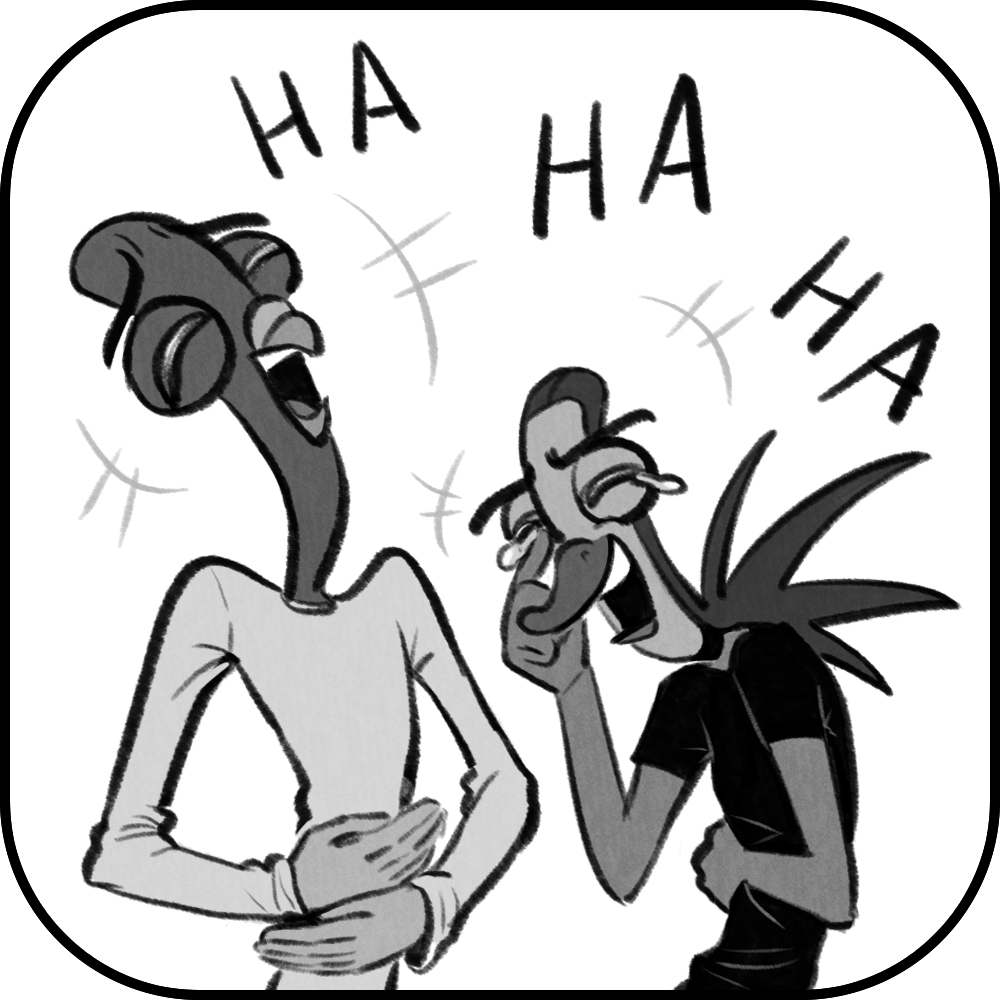
That's because the literary scene is like a hydra. Cut one head off, and two more spring up in its place. In fact, since 2022, 311 new literary magazines have been minted (1,000 since 2020). So, that's a hydra on crack. But better, because many of the magazines springing up these days are rad as hell. SEE: Bullshit Lit. Alice Says Go Fuck Yourself. Meow Meow Pow Pow. Call me a millennial, but I'd trade several quarterlys, reviews, and journals, for a Meow Meow Pow Pow.
It's not only that. Many magazines being minted focus on underrepresented voices and excluded communities, and unapologetically give a platform to people from all walks of life.
And thank fuck because the open secret of the literary community is that it's a community of mostly writers, not readers. Yes, writers read, but there is a difference.
When a reader sees Quarterly Review Journal of Such-and-Such filled with work exclusively by a bunch of folks with MFAs trying to be the next Alice Munro, George Saunders, or Toni Morrison, many feel excluded. But I'd bet good money that your average person is going to be much more curious about what Alice Says Go Fuck Yourself is publishing. Does that mean it's better? No. Should we replace all prestigious outlets with a series of wildly named mags? For sure, no. Those long-standing outlets have produced and will continue to produce brilliant works of literature; MFAs are popular for a reason.
What it means is that the writing world is evolving, not dying. Graphic novels are taught in schools. TTRPG Gaming is becoming a storytelling medium. Hell, video games are winning awards for their killer narratives. So many literary magazines in our database want visual works, hybrid works, video, audio, etc. They are begging the lit community to go nuts.
We're watching established magazines lose funding or go defunct because they are inundated with the same-old submissions, read by the same-old writers who've long since given up on the dream of finding readers, choosing instead to brush them off as simpletons too busy binging Netflix and salivating over cheap vampire novels.
But this is not at all a new narrative. Roxane Gay wrote a brilliant article back in 2010, This Just In: Poetry, Fiction & Literary Magazines Are Still Dying. This piece could be republished now, and likely again in another ten years. She has a wonderful quote in there that merits repeating:
"I have said it before but I will say it again. I remain weary of the ongoing, lofty prognostications about the death of literature, literary magazines, the printed word and so on. The conversation is getting so very tedious. Literature is dying the longest death in the history of deaths. It is amazing, really. If literature is dying, it is now time for a mercy killing so we can bury the dead, allow the dead to rest in peace, and surrender to the five stages of grief. I will never understand why magazines continue to publish articles which look backward rather than forward, in no way cover new ground or offer practical solutions that are grounded in hope rather than pessimism."
She wrote it in response to Ted Genoway’s article in Mother Jones, The Death of Fiction? where his sentiment echoed a lot of those who periodically proclaim the would-be downfall of literature, in which he blamed, among other things, editors not having time to source great literature due to a shift toward a level playing field:
"Back in the 1930s, magazines like the Yale Review or VQR saw maybe 500 submissions in a year; today, we receive more like 15,000. This is due partly to a shift in our culture from a society that believed in hierarchy to one that believes in a level playing field. This is good—to a point. The reality is that not everyone can be a doctor, not everyone can be a professional athlete, and not everyone can be a writer. You may be a precious snowflake, but if you can’t express your individuality in sterling prose, I don’t want to read about it."
Woof. But, at the same time, yikes.
Despite the fact that the phrase “if you can’t express your individuality in sterling prose, I don’t want to hear about it” makes me feel like an old white dude just open-mouth coughed on me in a library, his heart is sometimes in the right place. Though I don’t agree with his solution that “a few bold university presidents could save American literature” (cough-cough-cough). This is not uncommon and is in fact one of the most beaten-to-death omens of The End Times (coming in just behind, My favorite magazine just shut down so I guess it’s all shit now.)
The beautiful reality of today is that people who want to create new forms of expression don’t have to depend on universities anymore.
So here is our hope.
Soon literature becomes a place for the Taco Bell Quarterlys and The Paris Reviews. A place where creative works are respected across a spectrum, and one becomes a door to the other.
Relevant writing is not always going to fit into established magazines because it won't fit established modes of thinking. Genoway goes on to say young writers have to swear off navel-gazing. But here’s the thing, Ted: the internet came with some news. People are navel-gazers. We’re eight billion belly button fetishists on a hurtling rock. It’s really, really dumb, but here we are. Let’s write about it if we want to.
The world today is TikTok, GMOs, AI, phone addiction, and wars being fought with video game controllers from a bunker outside Las Vegas. So no, writing, literature, words, magazines, whatever is not dying. It has never, and will never be dying. It is always evolving in beautifully unpredictable ways.
And anyone who heralds its death, because their tastes are going out of style, is tacky. They’re a caricature of the type of pretentiousness that drives readers away and discourages innovative writing. Not only that, but they kill the very thing they love since nobody wants to learn their craft from the wrong end of a pedestal.
They will all quietly diddle themselves to death while the world wakes up to new ideas in literature. And we will always support magazines and help editors regardless of status, connections, vibe, or how many university presidents they’ve got on hand.
Insightful and bold! It’s nice to see the folks behind these new lit magazines making room for all of us.
Munro, dear hearts, Munro.